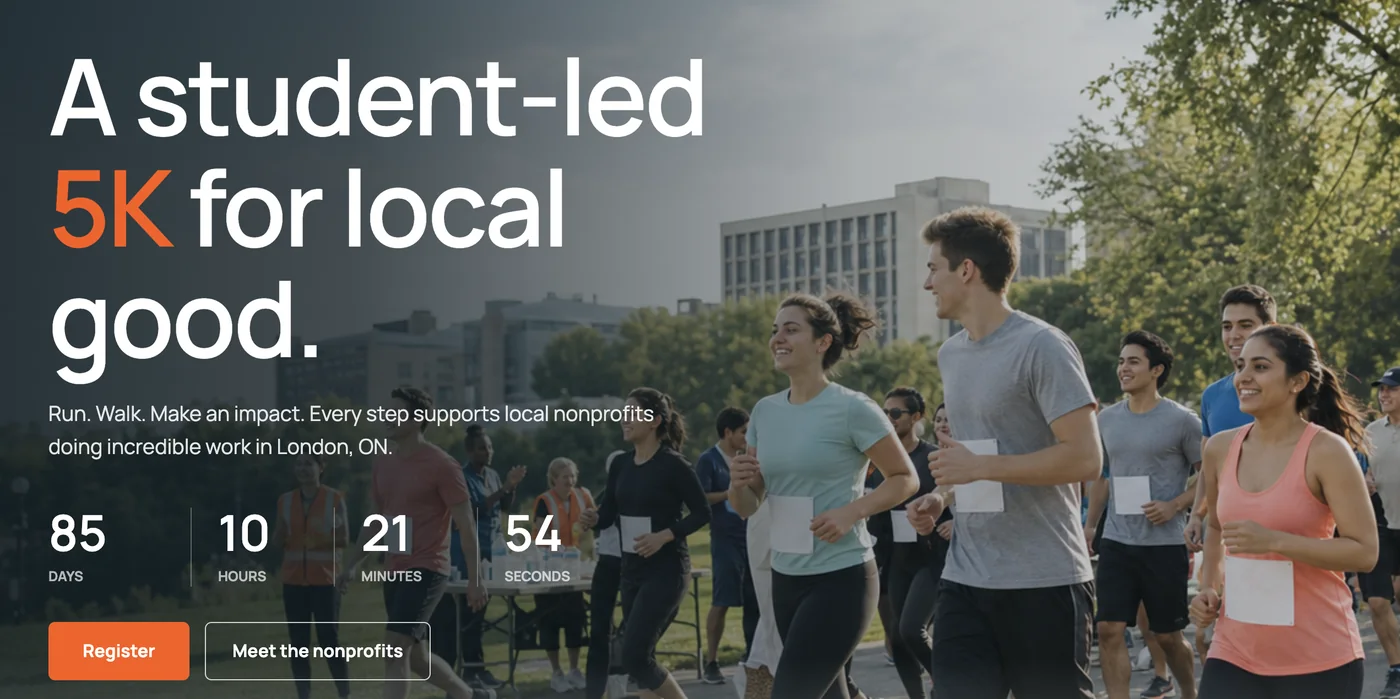
5k 4Good began with a simple idea: bring students and community partners together through a charity run that supports local not-for-profit organizations. As the lead, my role has been to help turn that idea into an event people can understand, trust, and take part in.
Leading more than a race
Being the lead means looking beyond the day of the run. It means helping shape the purpose of the event, coordinating the work that moves it forward, and keeping the experience clear for everyone involved. There are many audiences to consider: participants, volunteers, community partners, sponsors, and the organizations the event is meant to support.
That responsibility has pushed me to communicate clearly and make decisions with the wider mission in mind. A good event is not only organized well; it gives people a reason to care. Every detail needs to reinforce why the event exists and how someone can contribute.
The website was part of the event
As planning developed, it became clear that 5k 4Good needed a strong digital home. People needed one reliable place to learn what the event is, find key details, register, and understand how their involvement supports the community.
I built the website around those needs. Instead of treating it as a promotional extra, I treated it as part of the event experience itself. The goal was to make the path from curiosity to participation feel straightforward: explain the mission, answer the most important questions, and make the next step obvious.
Building for an initiative I was also leading changed the way I approached the work. I was not designing from a distance, rather, I understood the questions, constraints, and goals firsthand.
Connecting leadership and development
Working on both sides of the project created a valuable feedback loop. Event planning showed me what the website needed to communicate. Building the website exposed questions the event team needed to answer more clearly. Each responsibility made the other stronger.
It also reinforced an idea that guides much of my work: technology is most useful when it supports a real process and a real group of people. The website did not need complexity for its own sake. It needed clarity, credibility, and enough flexibility to support the event as it evolved.
What I am taking forward
Leading 5k 4Good has taught me that leadership and product work share many of the same fundamentals. Both begin with listening. Both require you to make priorities visible, communicate across different groups, and follow through on details. Most importantly, both are ultimately about creating an experience that works for other people.
I am proud to be helping build an initiative that connects students, community partners, and local not-for-profits. I am equally proud that the website gives that initiative a clear place to live and grow. Together, the event and the platform represent the kind of work I want to keep doing: practical, collaborative, and grounded in community impact.